

Table of Contents
- Why Portable Hygiene Matters for Truck Drivers
- Building a Truck Driver Hygiene Kit
- Body Wipes for Truck Drivers: What Actually Works
- Portable Handwashing Station for Truck Drivers
- How to Stay Fresh on a Long Haul
- Water Storage, Refilling, and Wastewater Disposal
- Privacy, Safety, and Cab Cleanliness
- Low-Cost and Low-Water Hygiene Alternatives
- Frequently Asked Questions
Last Updated: October 5, 2026
Why Portable Hygiene Matters for Truck Drivers
Portable hygiene for truck drivers means staying clean with compact, self-contained supplies when a real shower is hours or days away. This guide covers what works, from body wipes to water storage to wastewater disposal.
Truck stop showers are not guaranteed. They sell out, they close, they sit behind a wait list at 9 p.m. on a Tuesday.
What separates a workable setup from a pile of useless gear comes down to three things: water access, waste handling, and a routine you will actually follow.
Building a Truck Driver Hygiene Kit
A truck driver hygiene kit is a compact set of cleaning supplies stored in the cab so you can freshen up without hunting for a shower. Build it around three jobs: body, hands, and surface.
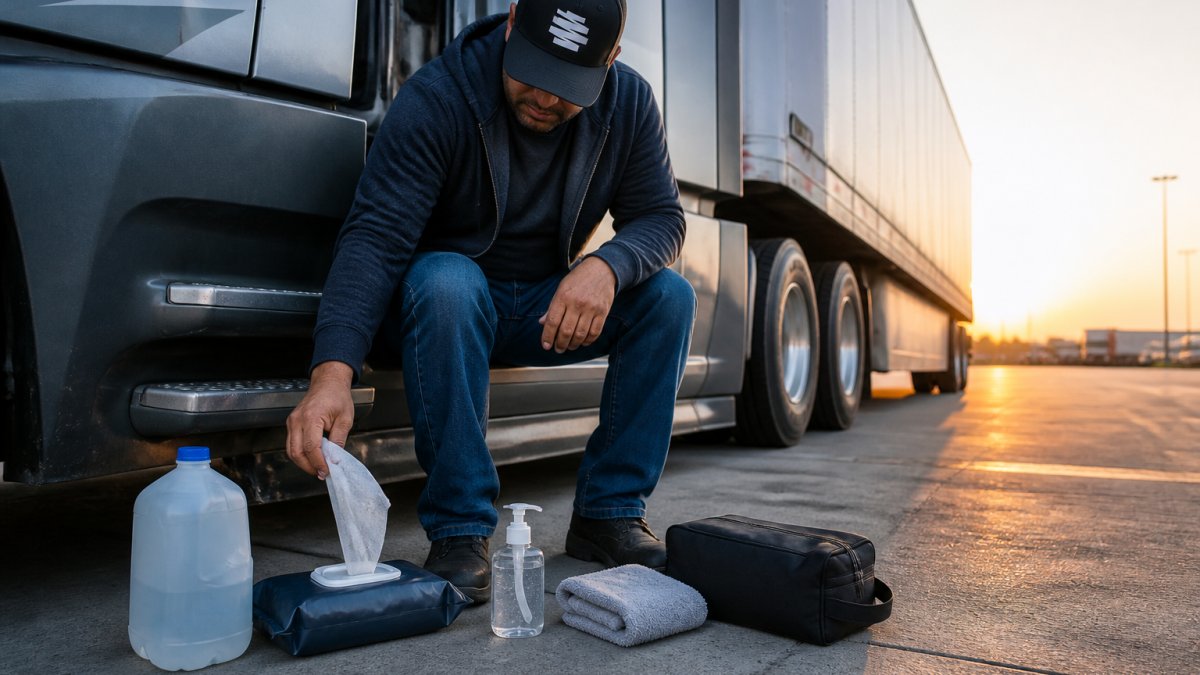
- Hand sanitizer and a small bottle of soap
- A water jug with a spigot for washing
Choosing Your Setup by Power Source and Size
Most drivers pick gear by brand or by what is on the shelf. Pick it by power source instead, because that decides where you can use it and what you carry.
| Setup | Power Source | Water Per Use | Footprint | Best For |
|---|---|---|---|---|
| Manual pump sprayer | Hand pump | 0.5 to 1 gallon | Small tote | Day runs, quick rinse |
| Gravity-fed bag | None | 1 to 2 gallons | Hangs from cab or tree | OTR, no power draw |
| USB rechargeable shower | USB battery | 1 to 2 gallons | Small tote plus charger | Regional runs, cab-side rinse |
| 12V plug-in shower | Truck 12V outlet | 1 to 2 gallons | Coiled hose and pump | Drivers with a free outlet |
| Propane tankless heater | Propane | 1 to 2 gallons | Largest footprint | Cold-weather OTR, outdoor use only |
A gravity bag is simplest and draws nothing from the truck. A USB rechargeable unit costs more upfront but gives a steady spray without pumping. A 12V plug-in works if you have an open outlet.
Trip-Length Variations: Day Runs vs. OTR
Day runs need very little. A box of body wipes, hand sanitizer, and a spare shirt covers a 10-hour shift that ends at home.
Over-the-road trips are different. Multi-day runs need water storage, a portable toilet option, and enough wipes to last the full loop. Pack for the longest stretch between reliable stops, not the average one.
| Trip Type | Body Wipes | Water | Toilet Option | Restock Frequency |
|---|---|---|---|---|
| Day run | 1 box | 1 gallon | Not needed | Weekly |
| Regional (2-3 days) | 2 boxes | 3 gallons | Portable toilet | Every trip |
| OTR (5+ days) | 3 boxes | 5+ gallons | Portable toilet + bags | Every 4-5 days |
What to Skip
A few items look useful in the store and then sit untouched for a year. A full-size camp shower with a rigid base eats sleeper space. A bar of soap turns into a puddle in a hot cab. A folding privacy tent is worth it only if you will use it more than once a month. Buy the small version first.
Body Wipes for Truck Drivers: What Actually Works
Body wipes for truck drivers work when they are large enough to cover real surface area and thick enough not to shred on contact. A wipe the size of a playing card is not cleaning a grown man after eight hours behind the wheel.
Manshowr makes XL cooling body wipes at 23 by 16 inches, which is roughly 40% larger than standard wipes. The biodegradable wipe material standards from TÜV AUSTRIA matter here too: the viscose fiber cloth is certified to break down in soil, so a used wipe in the trash is not a century-long problem.
What Separates a Real Body Wipe From a Fancy Napkin
Three things: size, thickness, and how it handles a full-body pass without falling apart. A wipe that covers a torso in one stroke saves you from using half a box per cleanup.
Manshowr wipes come in three scent paths. Limitless Eucalyptus gives a cooling menthol hit that wakes you up. If you want to try more than one, Manshowr XL Wipes - The Field Mix - 3 Pack bundles the range in one box. The CDC guidance on handwashing and hygiene is worth a read for the hand side of the routine, since wipes are a supplement, not a replacement for soap and water when a sink is available.


Portable Handwashing Station for Truck Drivers
A portable handwashing station for truck drivers is a small, self-contained setup that lets you wash your hands with soap and water anywhere.
Why bother when hand sanitizer exists? The CDC handwashing guidance recommends scrubbing for at least 20 seconds, which is longer than most people think.
Build one in three parts:
- Water source: a 2 to 5 gallon jug with a spigot you can open with one hand
- Soap: a pump bottle, not a bar, so it does not sit in a puddle
- Drainage: a small basin or bucket to catch runoff so you are not leaving a soap puddle at the pump
Set it on the ground beside the cab, not on the hood. Runoff goes in the bucket, then down a proper drain or into a waste container.
How to Stay Fresh on a Long Haul
Staying fresh on a long haul comes down to a routine you repeat at set points, not a heroic cleanup once a week. Small, frequent resets beat one big scrub-down.
The biggest mistake is waiting until you feel disgusting. By then you are tired, irritable, and more likely to skip the whole thing. Clean up at the same trigger points every day.
A Routine for Different Trip Lengths
Day run (under 12 hours): One wipe-down at the midpoint stop. Focus on face, neck, underarms, and groin. Fresh shirt if you have one.
Manshowr XL Cooling Body Wipes (23inx16in) - Limitless Eucalyptus - 3 Box →
Regional (2-3 days): Morning and evening wipe-down. Full body at night before sleep. Handwash at every fuel stop.
OTR (5+ days): Same morning and evening routine, plus a full reset every second day. Use a truck stop shower whenever one is available and cheap.
Water Storage, Refilling, and Wastewater Disposal
Water storage is the part drivers underestimate. A 2-gallon jug sounds like plenty until you use it for handwashing, a sponge bath, and rinsing dishes in the same day.
Refill points that actually work:
- Truck stop sinks and spigots, usually free with a purchase
- Rest area water fountains, if you have a funnel
- Campgrounds and RV dump stations, often for a small fee
Wastewater is the part nobody wants to talk about. Gray water from handwashing and wipe-downs goes into a sealed container, not on the ground. A 5-gallon bucket with a lid works.
| Waste Type | Container | Disposal Point |
|---|---|---|
| Gray water | Sealed bucket with lid | RV dump station |
| Used wipes | Sealable trash bag | Regular trash |
| Toilet waste | Portable toilet with seal | RV dump station |
| Food scraps | Small sealed bin | Trash, not drain |
Privacy, Safety, and Cab Cleanliness
Privacy is the difference between a routine you keep and one you abandon. A pop-up privacy tent gives you a place to change and wipe down without an audience.
Cab cleanliness is the other half of the equation. A clean body is pointless if the surfaces are grimy. Wipe the steering wheel, shifter, door handle, and cup holder with disinfecting wipes at the end of each shift.
Low-Cost and Low-Water Hygiene Alternatives
Low-water hygiene is not a compromise when it is done right. A driver can stay presentable on very little water with the right supplies, and the trade-offs are easier to plan once you know how much water each method uses.
Water Cost Per Method
| Method | Water Used | Time | Best For |
|---|---|---|---|
| Oversized body wipe | 0 | 3 to 5 minutes | Daily reset, any location |
| Sponge bath with a basin | 0.5 to 1 gallon | 10 minutes | Every second day |
| Gravity bag rinse | 1 to 2 gallons | 5 to 8 minutes | After a full wipe-down |
| Dry shampoo | 0 | 2 minutes | Scalp between washes |
| Truck stop shower | 10 to 20 gallons | 15 to 20 minutes | Weekly reset |
A wipe-down uses no water. A sponge bath uses about a gallon. A gravity rinse uses one to two. A truck stop shower uses ten to twenty.
The cheapest effective setup is a pack of oversized body wipes, a bottle of hand sanitizer, and a small water jug. The EPA guidance on water conservation is useful if you want to stretch every gallon further.
Other low-water options:
- Dry shampoo for the scalp between full washes
- Cooling towels soaked once and reused for hours
- Baking soda as a dry deodorant and a mild abrasive for hands
When Each Option Wins
Dry shampoo wins when your scalp is the problem and the rest of you is fine. A cooling towel wins in July when the cab is an oven. Baking soda wins when you have grease on your hands and no soap within reach. Baby powder wins on a 100-degree run when chafing keeps you awake. A USB fan wins when you just got out of a rinse and the sleeper is humid.
They keep you functional until the next one.
Frequently Asked Questions
What are the best portable hygiene products for truck drivers?
The essentials include oversized body wipes, hand sanitizer, a portable handwashing station or water jug with a spigot, toilet paper, and disinfecting wipes for the cab. Body wipes handle the full-body reset when showers aren't available. A small water reservoir with a spigot covers handwashing. Disinfecting wipes keep high-touch surfaces clean. Everything should fit in a compact bag you can grab without digging through the sleeper.
How can truck drivers freshen up when they cannot shower?
Start with an oversized body wipe for the face, pits, and groin, then follow with a second wipe for feet if needed. Manshowr XL wipes are 23 by 16 inches. A cooling formula with menthol helps you feel alert. Change socks and underwear, use deodorant, and you're back to feeling human without a shower stall.
Are body wipes useful for truck drivers on long hauls?
Yes, especially when shower access is unpredictable. At a busy truck stop, the shower line can eat 30 minutes or more. A body wipe takes two minutes in the cab. Manshowr wipes are individually packed, so they stay fresh in a glove box or gym bag. They bridge the gap on back-to-back driving days.
How can truck drivers wash their hands without a sink?
A portable handwashing station solves this. Look for a compact water reservoir with a spigot, often 2 to 5 gallons, paired with soap and paper towels. Some drivers mount a small station on the truck or keep a collapsible basin in the cab. If water isn't available, hand sanitizer with at least 60% alcohol works for a quick clean, but soap and water are better when you've been handling diesel nozzles or greasy parts.
What should new truck drivers pack in a hygiene kit?
Pack body wipes, hand sanitizer, a small water jug, soap, a quick-dry towel, deodorant, a toothbrush and toothpaste, and a few days of clean socks and underwear. Add disinfecting wipes for the steering wheel and door handles. A shower tent and flip-flops help if you plan to use truck stop showers. Keep it all in one bag so you're not hunting for deodorant at 2 a.m.
How should truck drivers store used wipes and hygiene supplies in a cab?
Keep clean supplies in a sealed bag or plastic bin to prevent moisture and odor. Used wipes go in a small trash bag with a tie handle, not loose in the cab. Even biodegradable wipes should go in the trash, not the toilet. Empty the trash bag at every fuel stop. A lidded small bin or a dedicated trash bag hanging from a hook keeps the cab from smelling like a gym locker.
Long hauls do not have to mean going days without feeling clean. The drivers who stay fresh are the ones who build a kit, stick to a routine, and restock before they run out. Manshowr XL cooling body wipes are built for exactly this: oversized, thick enough for a full-body pass, and available in eucalyptus, citrus, and fragrance-free. Add a box to your cab kit and get a real reset without a shower.
0 comments