

Table of Contents
- What You'll Need Before You Start
- Step 1: Wipe Down High-Sweat Areas First
- Step 2: How to Remove Body Odor Without Showering
- Step 3: Freshen Up After Gym Without Shower
- Step 4: Dry Shampoo and Hair Reset
- Step 5: Choosing the Best Body Wipes for Men
- Step 6: Change Clothes and Manage Fabric
- Step 7: Cool Down and Rehydrate
- Frequently Asked Questions
Last Updated: September 21, 2026
What You'll Need Before You Start
You don't need a shower to get clean sweat off your body. You need the right tools and about five minutes.
Learning how to clean sweat without showering comes down to three things: removing grime, killing odor-causing bacteria, and cooling your body down. Skip any one of those and you'll still feel gross an hour later.
Here's your kit:
- Oversized body wipes (not baby wipes or hand wipes)
- Dry shampoo or a small towel for your hair
- Antiperspirant or deodorant
- A clean shirt (especially if you've been sweating hard)
- Water to drink
The CDC's guidance on personal hygiene confirms that keeping skin clean and dry is the foundation of preventing odor and irritation.
Step 1: Wipe Down High-Sweat Areas First
Start with the spots that produce the most odor: armpits, groin, feet, and the back of your neck.
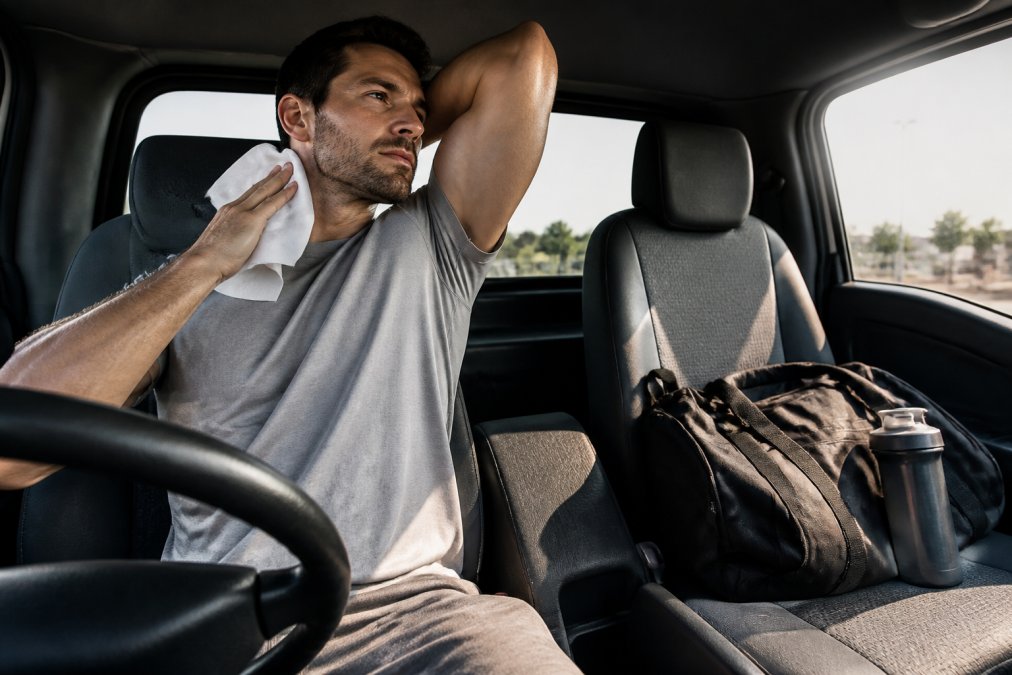
Here's the order that works:
- Armpits - front to back, then let them air dry
- Groin and inner thighs - wipe gently, one direction
- Feet - between the toes, then dry them
- Neck and behind ears - where grime collects
- Chest and back - the big surface areas
Step 2: How to Remove Body Odor Without Showering
Odor comes from bacteria, not sweat itself. Sweat is mostly water. When bacteria break it down, you get that smell.
What actually works:
- Wipe with an odor-neutralizing formula that targets bacteria
- Dry the area completely afterward
- Apply antiperspirant to clean, dry skin
- Change your shirt if it's soaked
Step 3: Freshen Up After Gym Without Shower
Freshening up after the gym without a shower follows the same logic, just faster.
- Wipe your face, neck, and arms first
- Hit armpits and groin with a fresh wipe
- Dry off with a clean towel
- Reapply deodorant
- Swap your sweaty shirt for a clean one
Step 4: Dry Shampoo and Hair Reset
Your scalp sweats too, and that sweat feeds odor. Dry shampoo absorbs oil and sweat at the roots without water.
Here's how to use it:
- Section your hair so you can reach the scalp
- Spray or sprinkle dry shampoo at the roots
- Wait a minute for it to absorb
- Massage with your fingers to work it in
- Brush or shake out the excess
Step 5: Choosing the Best Body Wipes for Men
The best body wipes for men are oversized, thick, and strong enough to handle an adult body. Flimsy wipes tear, dry out, and leave you feeling worse than before. But size and thickness are only half the story. What's in the wipe matters just as much as how big it is, especially if you're using them daily.
| Feature | Why It Matters |
|---|---|
| Oversized (roughly 8x12 in or larger) | Covers more skin per wipe, so you use fewer |
| Extra thick, low-lint cloth | Won't shred or leave fibers behind mid-use |
| Odor-neutralizing ingredients | Fights bacteria, not just masks smell |
| Cooling agent (eucalyptus, menthol, or witch hazel) | Helps your body reset after heat |
| Resealable pack | Stays fresh in a bag or truck |
Read the ingredient list, not just the label
Most drugstore wipes are built around one of two cleaning agents: alcohol or surfactants (the same class of mild detergents used in gentle cleansers).
- Alcohol-based wipes evaporate fast and feel instantly clean, but they strip the skin's natural oils. Used a few times a day, that stripping can leave skin tight, red, and more prone to irritation, and irritated skin actually produces more odor as it tries to repair itself.
- Surfactant-based wipes lift sweat, sebum, and bacteria off the skin without the same drying effect. They take a few extra seconds to dry, but they're gentler for repeated use.
Sensitive skin: what to look for and what to avoid
Skin has a natural pH around 4.5 to 5.5 (slightly acidic). That acidity is part of how it keeps odor-causing bacteria in check. Wipes with a high pH or harsh preservatives can push skin out of that range and make odor worse over time.
A few practical rules:
- Patch test first. Wipe a small area on your inner forearm and wait an hour. If it stings, itches, or turns red, don't use it on your face or groin.
- Skip added fragrance if you're prone to irritation. "Unscented" and "fragrance-free" are not the same thing, unscented can still contain masking fragrances.
- Avoid wipes with high alcohol content (often listed first or second on the label) for daily use.
- Don't wipe broken skin, rashes, or fresh razor burn. A wipe will sting and slow healing.
- Watch for preservatives like methylisothiazolinone (MIT), which is a common contact allergen in wet wipes.
What to skip
A common mistake is grabbing drugstore baby wipes. They're thin, small, and often leave a sticky residue. They're built for a baby's bottom, not a grown man after a twelve-hour shift. Hand sanitizer wipes are worse, they're for surfaces and hands, not skin.
Step 6: Change Clothes and Manage Fabric
Sweaty clothes hold odor. Even if you clean your skin, putting a damp, smelly shirt back on undoes the work. But not all fabrics hold odor the same way, and understanding why changes what you pack and how you treat what you're wearing.
Why some fabrics stink and others don't
Sweat itself is mostly water and has almost no smell. The smell comes from bacteria breaking down the fats, proteins, and oils in your sweat and sebum. The fabric you wear determines how well those bacteria can hang on and multiply.
- Polyester and other synthetics are oil-loving (oleophilic). They absorb the fatty compounds in sweat and trap them in the fiber. That's why a polyester gym shirt can smell fine out of the wash and then reek the moment you start sweating again, the odor compounds never fully rinsed out.
- Cotton absorbs water well but holds onto it, which keeps a wet layer against your skin. It doesn't trap odor compounds the way polyester does, but a soaked cotton shirt stays damp and feeds bacteria.
- Merino wool has a natural antimicrobial structure that resists odor-causing bacteria. It also regulates temperature and can be worn multiple days between washes without developing the same funk. The trade-off is cost and a more careful wash cycle.
- Treated synthetics (often labeled "odor-control" or "antimicrobial") use a silver or zinc treatment to slow bacterial growth. These work, but the treatment fades with repeated washing, so the odor resistance drops over time.
What to do when you can't shower or wash
- Change your base layer (shirt and socks) if you can. This is the single highest-impact move.
- Air out your outer layer instead of wearing it damp. Hang it somewhere with moving air, not balled up in a bag.
- Turn socks inside out and let them dry if you have no spare pair. The inside is where the bacteria are.
- Avoid wearing the same sweat-soaked shirt twice without at least airing it out overnight.
- Rotate two shirts on a multi-day trip instead of wearing one until it's unwearable. Giving a shirt 24 hours to dry and air out cuts odor dramatically.
No-wash fabric care that actually works
If you can't launder, you can still reduce odor in worn clothing:
- Sunlight and fresh air kill some surface bacteria and dry fabric fast. Ten to fifteen minutes in direct sun helps more than most people expect.
- A quick steam from a hotel iron or a hot shower (hanging the shirt in the bathroom) loosens odor compounds. It's not a wash, but it resets the fabric.
- A light spritz of vodka-and-water (roughly 1 part vodka to 3 parts water) neutralizes odor-causing bacteria without leaving a scent once it dries. This is a common trick among stage performers and travelers.
- Baking soda in a bag with a worn shirt overnight absorbs surface odor. Shake it out in the morning.
Step 7: Cool Down and Rehydrate
Cooling down slows sweating. When your body temperature drops, your sweat glands calm down.
Simple ways to cool off:
- Move into shade or air conditioning
- Drink cold water
- Wipe your neck, wrists, and face with a cool cloth
- Loosen tight clothing
- Take slow, deep breaths
Frequently Asked Questions
How do I clean myself when I can't shower?
Start by wiping high-sweat areas like underarms, groin, feet, and the back of your neck with a thick body wipe. Apply antiperspirant once skin is dry, use dry shampoo on your hair, and change into fresh clothes if possible. This routine removes sweat residue, reduces bacterial growth, and helps you smell clean without water.
How to smell good after sweating without showering?
Sweat itself has little odor; the smell comes from bacteria breaking it down. Wipe away sweat quickly, use an odor-neutralizing body wipe, and apply antiperspirant to clean, dry skin. A quick change of shirt and a spritz of dry shampoo can also help. Staying hydrated and cooling down slows further sweating.
Is it okay to sweat and not shower?
Sweating and not showering immediately is fine for most people, especially if you clean up with body wipes within an hour or two. The key is to remove sweat and grime before bacteria multiply. If you have sensitive skin or are prone to breakouts, rinse or wipe thoroughly and change out of damp clothes to avoid irritation.
What is the best way to remove sweat residue from skin?
Use a thick, oversized body wipe that can handle a full adult body without falling apart. Wipe from clean areas toward dirtier ones, and don't forget behind the knees, elbows, and feet. Follow with a light moisturizer if skin feels dry.
0 comments