

Table of Contents
- Why Wipes Dry Out and What You Can Do About It
- How to Store Wet Wipes to Retain Moisture
- How to Keep Wipes Wet While Traveling
- How to Rehydrate Dried-Out Wipes
- Storing Reusable Cloth Wipes
- Best Practices for Different Wipe Types
- Troubleshooting Common Drying Problems
- Frequently Asked Questions
Last Updated: October 11, 2026
Why Wipes Dry Out and What You Can Do About It
Wipes dry out because moisture evaporates. Air exposure, heat, and broken seals all speed up the process. Once a wipe loses its moisture, it becomes stiff and useless, basically a rough piece of cloth that won't clean anything.
The good news: drying is preventable. Most of it comes down to storage. Keep wipes sealed, cool, and away from direct sunlight, and they'll stay wet and ready to use for weeks. If you're someone who needs to keep wipes from drying, whether you're stocking your gym bag, truck cab, or travel kit, the strategies here will keep your supply fresh.
How to Store Wet Wipes to Retain Moisture
The best way to keep wipes from drying is to minimize air exposure. Every time you open a container, moisture escapes. The less you open it, the longer your wipes stay wet. But the method depends on which package type you're using.
Keeping the Container or Package Sealed
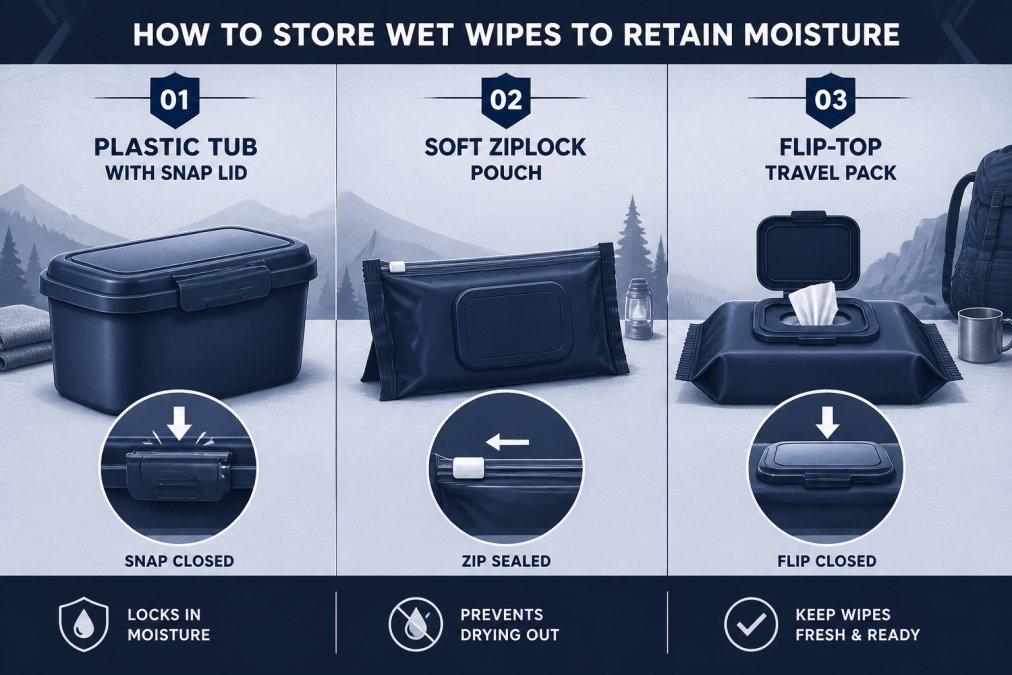
A tight seal is your first line of defense. Most wet wipes come in one of three formats, and each has different seal vulnerabilities.
Plastic tubs with snap or screw lids. These are common for baby wipes and body wipes. The lid must close fully and sit flush against the rim. Check that the rubber gasket (the seal ring inside the lid) is intact and not cracked or dried out.
Soft packs or pouches with ziplock seals. These are popular for travel and compact storage. The seal works only if you close it all the way to the corner. A partial seal that looks closed still lets air in.
Travel packs or flip-top containers. These have a hinged lid that flips open and closed. The seal depends on the hinge mechanism staying tight. Check that the lid closes with slight resistance, not loosely. If the hinge is cracked or the lid no longer snaps shut, the container is compromised.
Regardless of type, test the seal before you buy. Close the lid or seal the pack and try to pull it open. There should be noticeable resistance. A seal that opens easily without effort won't hold moisture.
Choosing a Suitable Wipes Container
If you transfer wipes from their original packaging to a different container, the new container must seal as well as or better than the original. Airtight plastic containers with snap-lock lids are reliable. Resealable pouches with ziplock seals also work if you seal them completely each time.
Avoid containers with loose-fitting lids or lids that don't sit flush. Even a small gap around the edge allows air circulation. If you're storing wipes in a drawer or cabinet, use a container with a lid, not an open bin. Dust and air exposure will dry them out faster.
For reusable containers, wash and dry them thoroughly before filling with wipes. Residual moisture or soap residue can contaminate the wipes or promote mold growth.
Avoiding Direct Sunlight and Heat
Heat and light speed up evaporation. Store your wipes in a cool, dark place. A shelf in a closet, a drawer, or a cabinet works. Avoid windowsills, dashboards, or anywhere that gets direct sun.
Temperature matters too. Room temperature (around 65-75 degrees Fahrenheit) is ideal. Don't store wipes in hot environments like a car in summer, near a heater, or in direct sunlight. After eight hours in a hot vehicle, even a sealed container will show moisture loss.
If you're traveling and need to keep wipes in a warm place, use an insulated bag or keep them in the shadiest spot available. A small cooler or insulated pouch designed for lunch items works well for travel.
How to Keep Wipes Wet While Traveling
Travel presents a challenge: you need wipes accessible, but you're moving between different temperatures and environments. The trick is containment and minimal air exposure.
Pack wipes in a sealed container or resealable pouch, then place that inside a small insulated bag or zippered pouch. This creates a barrier against heat and air. Keep the inner container sealed until you need a wipe. Don't leave the outer bag in direct sunlight or in a hot car.
For long trips, bring more wipes than you think you'll need. It's easier to have extras than to discover your supply dried out halfway through.
How to Rehydrate Dried-Out Wipes
If your wipes have already dried out, you have two options: rehydrate them or discard them. The choice depends on how long they've been dry, their condition, and what you plan to use them for.
Pre-Moistening Dry Wipes
Dry wipes can be brought back to life if they're still intact and haven't been stored in a contaminated environment. The simplest method is to add water.
Using water alone. Spray a dried wipe lightly with clean water from a spray bottle, or soak it briefly in water. Let it absorb for a minute or two. The wipe will soften and become usable again. Use distilled water if possible.
Don't oversaturate. A wipe should be damp, not dripping. Too much moisture makes it fall apart or causes it to tear when you use it.
Using a mild solution. For a more effective rehydration, mix water with a small amount of mild soap or a gentle cleaning solution. A few drops of unscented dish soap in a cup of distilled water works. This restores both moisture and cleaning power.
Manshowr XL - Cooling Body Wipes (40cmx60cm) - Limitless Eucalyptus - 1 Box →
Alternatively, if the wipes are for cleaning (not skin contact), you can use a diluted all-purpose cleaner or a solution of equal parts water and white vinegar. Vinegar also helps prevent mold growth if you're storing the rehydrated wipes for a few days.
Storage after rehydration. Once you've rehydrated wipes, use them within a few hours if possible. If you need to store them, place them in a sealed container in a cool location. Rehydrated wipes are more prone to mold growth than factory-moistened wipes because you've introduced water without the preservatives commercial wipes contain.
When to Discard Dried Wipes Instead
Not all dried wipes are worth saving. Rehydrating old wipes introduces uncertainty about hygiene and effectiveness. Discard wipes in these situations:
Age and storage duration. If a wipe has been dry for more than two weeks, or if you're unsure how long it's been sitting, throw it out. The longer a wipe sits dry, the more likely it is to have accumulated dust, bacteria, or mold spores that won't be eliminated by adding water.
Visible damage or degradation. If a wipe is torn, cracked, or shows signs of brittleness, discard it. Rehydrating a damaged wipe won't restore its structural integrity, and it may fall apart during use.
Odor or discoloration. If the wipe smells off, musty, or sour, don't reuse it. These are signs of mold or bacterial contamination. Discoloration (yellowing, browning, or dark spots) also indicates contamination. Fresh wipes are cheap insurance against skin irritation or infection.
Intended use on sensitive areas. If you're using wipes on a baby's skin, face, or any area prone to irritation, discard dried wipes rather than rehydrate them. The risk of introducing contaminants outweighs the savings. Factory-sealed wipes are formulated with preservatives and sterility standards that homemade rehydration can't match.
Wipes stored in questionable conditions. If the wipes were stored in a damp, dusty, or uncontrolled environment before drying out, discard them. You can't assess what contamination may have occurred.
Storing Reusable Cloth Wipes
Reusable cloth wipes need different care than disposable ones. After use, rinse them thoroughly with clean water and hang them to dry completely. Once dry, store them in a sealed container or drawer to keep dust off.
Before reusing, dampen the cloth with water or a mild solution. This mimics the moisture of a disposable wipe. The advantage of cloth wipes is that you control the moisture level each time you use them.
Keep reusable wipes separate from other laundry. Wash them regularly with mild detergent and dry completely before storing.
Best Practices for Different Wipe Types
Different wipes have different moisture needs. Baby wipes and makeup wipes are thinner and more prone to drying. Cleaning wipes and body wipes are thicker and hold moisture longer.
Body wipes like Manshowr's oversized format are engineered to stay wet longer because they're thicker and have more surface area to retain moisture. Store them the same way, sealed, cool, and dark.

For any wipe type, the core rule stays the same: seal the container, keep it cool, and minimize air exposure.
Troubleshooting Common Drying Problems
Problem: Wipes dry out despite being sealed. Check the seal. Even a small gap lets air in. If the lid or closure is damaged, transfer wipes to a new container with a better seal. Also check the storage location, if it's near a heat source or in sunlight, move it.
Problem: Wipes dry out within a few days. This usually means heat exposure. Move the container to a cooler location away from sunlight. In a truck or car, store wipes in the shadiest spot and in an insulated bag if possible.
Problem: Rehydrated wipes fall apart or feel weak. You may have oversaturated them, or the wipes were dry for too long. Use less water next time, or just discard very old dried wipes and start fresh.
Problem: Wipes develop a smell or discoloration. This indicates contamination or mold. Don't reuse them. Store future wipes in a cleaner, drier location and replace your stock more frequently.
Keeping wipes from drying out is straightforward: seal the container, store it cool and dark, and minimize air exposure. For men who need reliable wipes on the job, in transit, or at the gym, staying on top of storage means always having a fresh, effective wipe when you need it. Manshowr's oversized body wipes are designed to handle tough conditions, but even the best wipes need proper storage to stay wet and ready.
Frequently Asked Questions
Why do wipes dry out so quickly after opening?
Wipes dry out because moisture evaporates when the package or container is opened and exposed to air. The faster air circulates around the wipes, the quicker they lose moisture. Heat, direct sunlight, and low humidity all speed up evaporation. Even small gaps in a seal or a loose lid allow air to escape continuously, which is why keeping wipes from drying out depends entirely on how well you seal them after each use.
How do you keep wipes from drying out in a gym bag or truck cab?
Use individually wrapped wipes or transfer opened packs to an airtight container with a tight-sealing lid. Store them in the coolest part of your bag or truck, away from direct sunlight and heat sources. If you're carrying wipes for days at a time, consider a small resealable plastic bag or a dedicated wipes case. Quality wipes like Manshowr XL Cooling Body Wipes come individually wrapped, so each one stays fresh until you use it, making them ideal for travel and on-the-job use.
Can you add water to dried-out wipes to rehydrate them?
Yes, you can rehydrate dried wipes by adding water, but use distilled or filtered water to avoid introducing bacteria or minerals. Spray or lightly dampen the wipes rather than soaking them, as excess moisture can promote mold growth. For a cleaning boost, you can add a small amount of mild soap or a gentle cleaning solution. However, rehydrated wipes have a shorter shelf life once rewetted, so use them within a day or two and store them in a sealed container.
How long do opened wipes stay moist if stored properly?
Properly sealed wipes can stay moist for several weeks, depending on humidity and temperature. In a cool, sealed container away from heat and sunlight, you can expect opened packs to maintain moisture for at least 2-4 weeks. However, once a wipe is removed and exposed to air, it begins to dry immediately. This is why individually wrapped wipes offer the best protection for long-term freshness, especially if you use them sporadically or travel frequently.
0 comments