

Quick Summary: A travel hygiene kit needs only a few items: body wipes, deodorant, oral care, and any daily medication. Keep liquids small and sealed, pack wipes in a closed bag, and patch test new products before you leave.
Table of Contents
- What Goes in a Travel Hygiene Kit
- What to Pack in a Travel Toiletry Kit
- How to Organize Toiletries for Travel
- Choosing Travel Hygiene Bottles and Containers
- Packing Individual Wipes as Sachets for Travel
- Patch Testing New Products Before You Travel
- Building Your Kit This Week
- Frequently Asked Questions
Last Updated: November 16, 2026
What Goes in a Travel Hygiene Kit
A travel hygiene kit covers the basics you need to stay clean and feel fresh away from home. For most men, that means a few essentials that handle sweat, grime, and the day-to-day mess of travel. Manshowr XL Cooling Body Wipes are one of those essentials. One wipe usually handles a full upper-body cleanup. Heavy sweat may take two, which makes them useful when a shower is hours away.
Build the kit around what you actually use each day. Start small, then add only what you miss. The list below is organized by job, not by brand, so you can swap in whatever you already own.
Body and skin
- Body wipes for sweat and grime between showers. One box holds 12 individually wrapped wipes, about 12 days at one a day or about 6 days at two a day.
- Deodorant, underarms only.
- A small bottle of moisturizer, if you use one.
- Lip balm and sunscreen for outdoor days.
Oral care
- A travel toothbrush and a tube of toothpaste that fits under the TSA liquid limit.
- Floss, if you use it daily. It weighs almost nothing and is easy to forget.
Health and safety
- Any daily medication, in its original labeled container. Keep it in your carry-on, not a checked bag.
- A small first-aid strip kit.
- A hand towel or a few paper towels.
What to leave out Full-size bottles, anything you use less than once a week, and duplicate items. A two-day business trip needs far less than a week on the road. If you are not sure whether an item earns its spot, pack it for one trip and see whether you reach for it. If you do not, it stays home next time.
A common pattern is to overpack liquids and underpack wipes. Liquids are the item most likely to leak or get flagged at security, and wipes are the item most likely to save a day when a shower is hours away. Weight your kit toward the second category.
What to Pack in a Travel Toiletry Kit
Pack for the trip you are taking, not the trip you hope to have. A two-day business trip needs far less than a week on the road.
Core items for almost any trip:
- Body wipes, one box covers about 12 days at one wipe a day
- Deodorant, underarms only
- Toothbrush and toothpaste
- Any daily medication, in its original labeled container
- A small pack of tissues and a hand towel
Add these for longer or rougher trips:
- A second box of wipes, since heavy sweat may take two wipes
- Lip balm and sunscreen for outdoor days
- A small first-aid strip kit
Keep the kit light. Every item should earn its spot.
How to Organize Toiletries for Travel
A good kit is easy to find things in. Group items by use so you are not digging through a bag at a gas station. The system below uses three zones, and it works whether you carry a small dopp kit or a gallon-size zip bag.
Zone 1: quick access. Put wipes and deodorant in one easy-access pouch or the outside pocket of your bag. These are the items you reach for mid-day, between meetings, or after a workout, so they should not be buried under everything else. Carry a few loose sachets here and keep the rest of the box closed until you need them. The same zone idea works for grooming tools, as Kyro Beauty explains in its guide to packing beauty tools for travel.
Zone 2: daily routine. Keep oral care in a second pouch. A toothbrush, toothpaste, and floss together means one grab in the morning and one at night. If you fly, this is the pouch that goes into the clear quart-size bag at security, so keep it small enough to fit alongside your other liquids.
Zone 3: health and backup. Store medication in a separate case so it stays dry and easy to check at security. Add your first-aid strips and any backup wipes here. Keeping this zone separate means you are not opening your medication case every time you want a wipe.
Choosing the bag itself
- Look for a bag with a firm bottom or a flat base so it stands up on a hotel counter instead of tipping over.
- A bag with a full-length zipper opens wider and is easier to pack than one with a small top opening.
- A water-resistant lining helps if a bottle leaks. It will not stop a spill, but it keeps the mess inside the bag instead of on your clothes.
- Label each pouch if you use more than one. A strip of tape and a marker is enough.
Space-saving moves that actually work
- Pack liquids at the bottom of the bag, standing up, so a leak runs down instead of across.
- Roll soft items like a hand towel instead of folding them. Rolls fill gaps better.
- Keep one small bag inside the main bag for anything that can leak, so a failure stays contained.
- Do not overfill. A bag you can close without forcing is a bag that will not burst in transit.
Watch out: wipes are sold in sealed sachets that do not reseal, so pack the box in a bag that can close fully. Once a sachet is open, use the whole wipe and throw it away. Do not try to save a half-used wipe for later, because it will dry out and stop being useful.
A common pattern is to organize by container size instead of by use. That looks tidy at home and falls apart on the road, because the item you need most is often the smallest one. Group by when you use it, not by how big it is.
Choosing Travel Hygiene Bottles and Containers
Liquids can cause trouble at airport security. Use small, leak-proof bottles if you are flying.
Look for bottles with screw-top or flip-top lids and a firm seal. Label each one. Fill them only partway if the trip involves altitude changes, since pressure can push liquid past the seal.
Pick containers that stand up on a flat surface so they do not tip over in a hotel bathroom.
Packing Individual Wipes as Sachets for Travel
Each wipe is sealed in its own sachet, so it stays moist until you open it. That makes the sachet format practical for travel. Keep the box in a closed bag so the sachets stay protected during the trip.
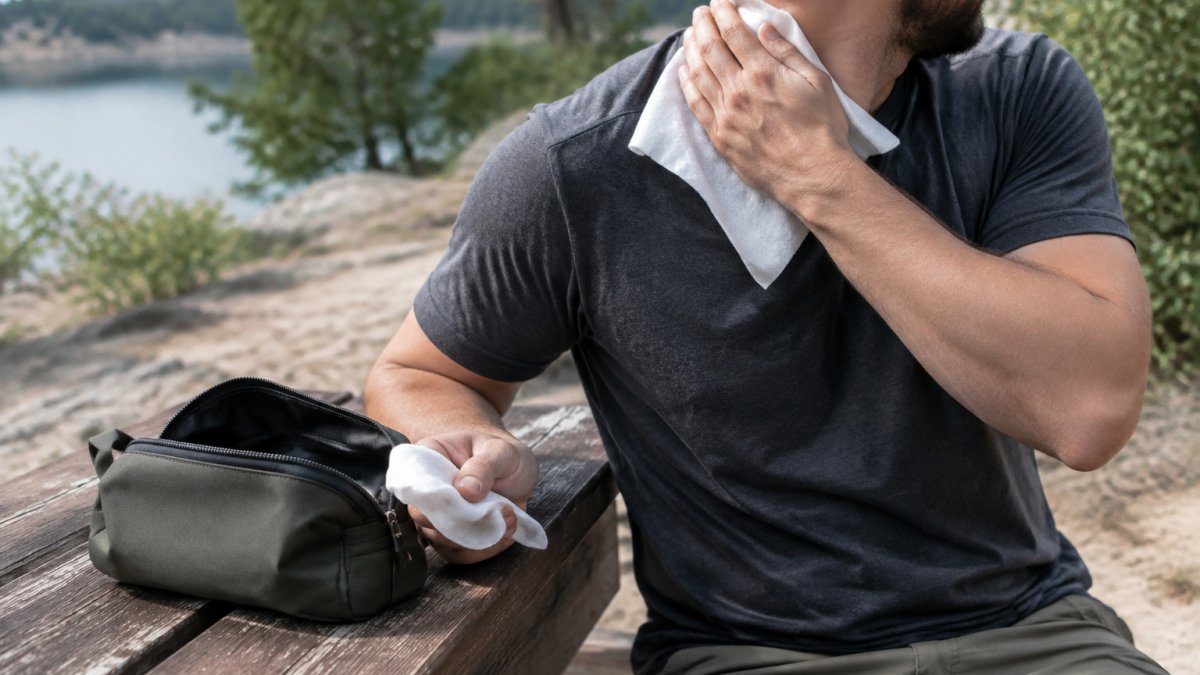
Carry a few loose sachets in an outside pocket for quick cleanups between meetings or after a workout. Keep the rest in the box until you need them.
Manshowr has been featured by Truckers News and on The Lead Pedal Podcast. The product is sold as a single box or in bundles, and one box is $29.95.
Keep them off your face and away from your eyes. Use them from the neck down.
Patch Testing New Products Before You Travel
Patch test any new product at home before you leave. This is especially important if you have sensitive skin.
- Apply a small amount to the inner forearm.
- Check the spot at 24 hours.
- Check it again at 48 hours.
- If you see redness, itching, or irritation, stop using the product.
If you have a skin condition, check with your doctor first.
Building Your Kit This Week
Start with the core items and one box of body wipes. Pack a test bag and take a short trip or a long day out to see what you actually reach for. Adjust the kit after that trip.
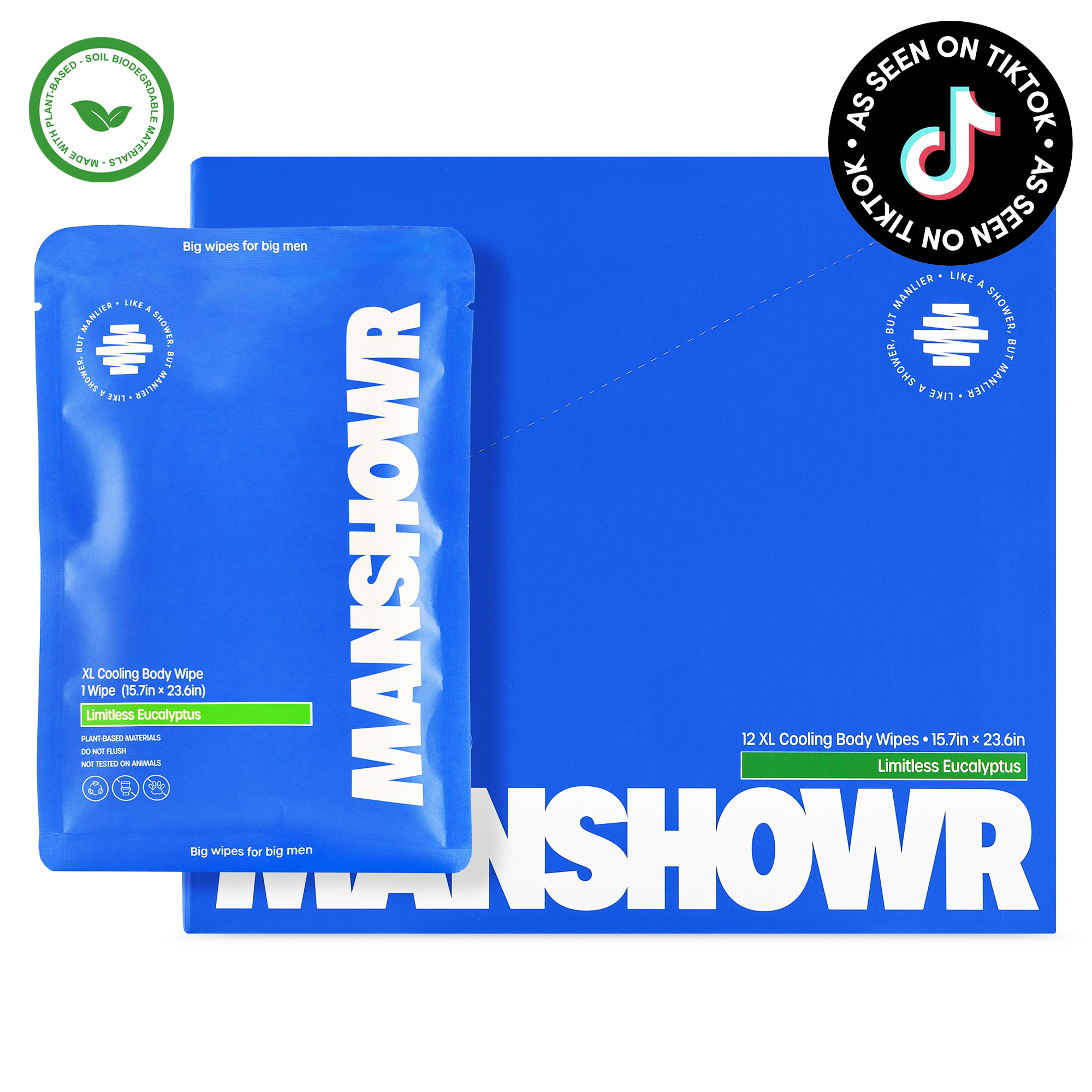
If you are new to Manshowr, the Manshowr XL Cooling Body Wipes (23inx16in) - Limitless Eucalyptus - 1 Box is a good place to start. Used wipes go in the trash, never the toilet. Outdoors, pack them out.
Frequently Asked Questions
What should a personal hygiene kit include?
A solid travel hygiene kit covers the basics: a toothbrush and travel toothpaste, deodorant, a comb, a small pack of body wipes, a few refillable bottles for daily products, and any personal medications. Keep it to what you use every day. Body wipes such as Manshowr XL Cooling Body Wipes work well for a quick upper-body cleanup when you cannot get to a shower. A box of 12 individually sealed wipes is about 12 days at one a day, so check how many days you will be away before you pack.
How do you make a toiletry travel bag?
Start with a small, zippered bag that stands up on its own so you can see everything at once. Sort items into groups such as teeth, skin, and hair, and keep the ones you use every morning in the front pocket. Put liquids in leak-proof bottles inside a clear bag. Pack the heaviest items at the bottom and keep wipes and deodorant where you can reach them without digging.
Should I patch test new products before I travel?
Yes. Before you pack anything new, wipe a small area of your inner forearm once and check the spot after 24 hours and again after 48 hours. If you have sensitive skin or a skin condition, check with your doctor first. Finding a reaction at home is far easier than dealing with one on a long trip.

0 comments