

Table of Contents
- Step 1: Plan Your Day Around Dirt and Dust
- Step 2: Build a Construction Worker Cleanup Kit
- Step 3: Control Construction Dust on the Job Site
- Step 4: How to Remove Construction Dust from Clothes Before You Leave
- Step 5: How to Wash Construction Worker Clothes Without Wrecking Your Washer
- Step 6: Best Body Wipes for Construction Workers (and How to Use Them)
- Step 7: Keep Your Truck Cab and Gear from Turning into a Dirt Trap
- Common Mistakes That Keep Construction Workers Dirty
- Frequently Asked Questions
Last Updated: October 16, 2026
Step 1: Plan Your Day Around Dirt and Dust
Learning how to stay clean working construction starts before the first tool comes out of the truck. Dust, mud, and sweat are guaranteed on an active job site, so the smart move is planning for them instead of reacting at 5 p.m.
Think about your day in three phases: before work, during work, and the ride home. Each one needs a small plan.
- Before work: pack a change of clothes and your cleanup gear
- During work: keep dust off your skin and clothes where you can
- After work: clean up before you get in the cab, not after
The guys who finish a shift feeling human aren't lucky. They just built a routine.
Step 2: Build a Construction Worker Cleanup Kit
A construction worker cleanup kit is a small bag of supplies you keep in your truck or gang box so you can wipe down, change, and reset without hunting for anything.
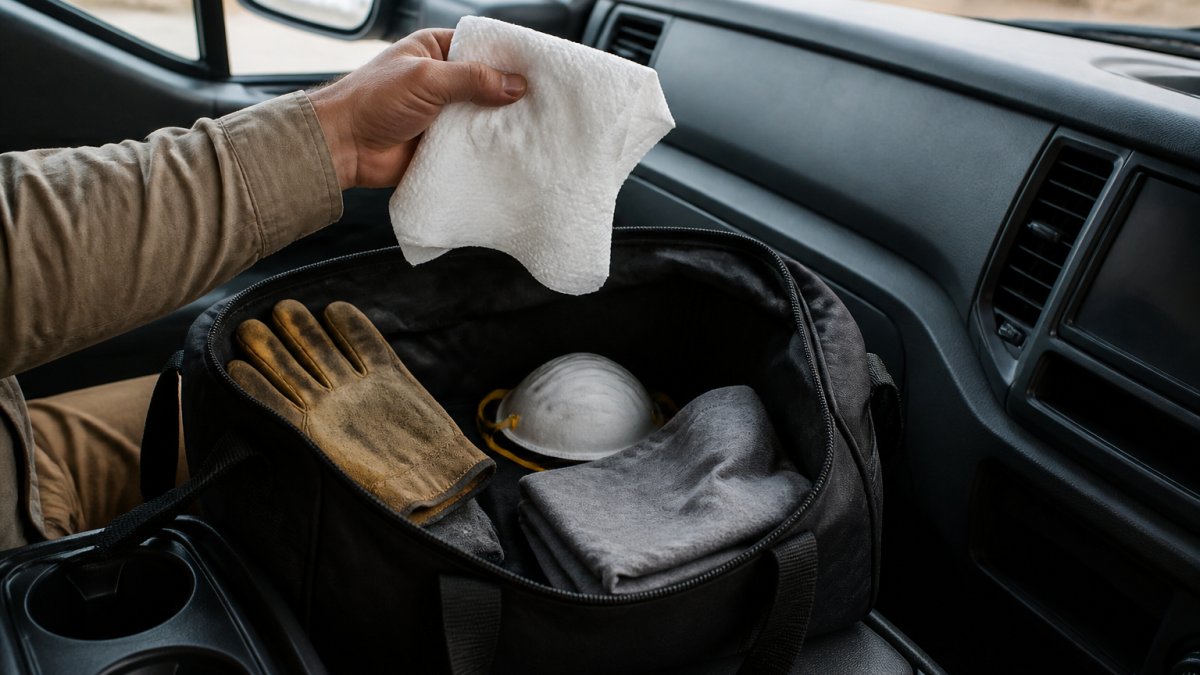
Here's what belongs in it:
- Oversized body wipes for sweat and grime
- A spare t-shirt, socks, and underwear
- Work gloves and a second pair
- A dust mask or respirator
The kit matters because most job sites don't have a locker room. If your clean gear is at home, it does nothing for you at 3 p.m. when you're covered in drywall dust.
Step 3: Control Construction Dust on the Job Site
Construction dust is the main obstacle to staying clean, and it is mostly about airborne particles you cannot see.
You cannot eliminate dust, but you can cut how much lands on you. The trick is to think in layers: source, air, and body.
At the source
- Cut, grind, and demo with a vacuum attachment or a shroud hooked to a shop vacuum or industrial vacuum instead of letting the dust plume
- Mist dusty surfaces with a hose before sweeping when the site allows it
- Drop debris into bags or a chute instead of tossing it and letting it puff
- Keep a high-powered blower for clearing debris, not for blowing dust onto yourself
In the air
- Set up ventilation or fans to push fresh air through the work area, and position yourself upwind of the cut when you can
- Run a box fan with a furnace filter taped to the back as a cheap air scrubber in a closed room
- Give dust time to settle before you walk back through an area you just cut in
On your body
- Wear a dust mask or respirator when cutting, sanding, or demoing. A common pattern is that the guys who skip it are the same guys coughing at the end of the week
- Wear long sleeves and a hat or hood. Bare arms collect a visible layer of dust in an hour
- Tuck your shirt in and tape or cinch cuffs if you are doing heavy demo, so dust does not funnel down your back
- Keep a dedicated set of work clothes for dusty tasks so your clean spare stays clean
The OSHA guidance on silica dust exposure is a good reference for why dust control matters on active sites, especially when cutting concrete or masonry.
Step 4: How to Remove Construction Dust from Clothes Before You Leave
Removing construction dust from clothes before you leave the site is the single biggest thing you can do to stop tracking dirt into your truck and home. Do it outside, away from doorways.
Follow this sequence:
- Step away from the work area and face away from the wind
- Brush off your shoulders, back, and legs with your hands or a soft brush
- Shake out your shirt and pants, holding them away from your body
- Wipe down your boots and knock the soles together
- Change into your spare shirt if the first one is soaked through
- Bag the dirty clothes in a trash bag and seal it
Boots hold more dust than people expect. A quick knock-and-wipe saves your floor mats and your washing machine.
Step 5: How to Wash Construction Worker Clothes Without Wrecking Your Washer
Knowing how to wash construction worker clothes properly keeps your washer alive and your work gear lasting longer. Heavy dust, mud, and grit are hard on machines, so a little prep goes a long way.
- Shake out and brush off clothes outside before they go in the house
- Wash work clothes separately from regular laundry
- Use a normal cycle with regular detergent
- Skip the fabric softener, which can trap grit and dull the fabric
The thing nobody tells you about work clothes is that the dry dust is the real problem, not the wash water. Pre-brushing outside removes most of it before it ever hits your machine.
Step 6: Best Body Wipes for Construction Workers (and How to Use Them)
The best body wipes for construction workers are oversized, thick, and built to handle a full adult body, not a diaper.
Manshowr makes XL cooling body wipes at 23 x 16 inches, roughly six times the surface area of a standard 7 x 8 inch baby wipe.
Manshowr XL Cooling Body Wipes (23inx16in) - Limitless Eucalyptus - 1 Box →
How to use them on a shift:
- Start with your arms, chest, and neck
- Move to your underarms and torso
- Finish with your legs and feet
- Use one wipe per cleanup, two if you're especially grimy
Manshowr comes in three scents: Limitless Eucalyptus, Citrus Punch, and Fragrance Freedom with no added fragrance. You can grab a single box of the Limitless Eucalyptus wipes or a 3-box bundle if you go through them fast.


They're for when a shower isn't an option. Keep them off your face.
Step 7: Keep Your Truck Cab and Gear from Turning into a Dirt Trap
Your truck cab is where clean and dirty meet, so it is worth protecting.
Set up the cab as a clean zone
- Keep a rubber mat or towel on the driver's seat on dusty days, and shake it out at the end of the shift
- Store dirty clothes in a sealed bag, not loose on the floor or the bunk
- Keep your clean bag in the cab, not the bed, so it stays dry and dust-free
- Wipe down the dash, console, and steering wheel weekly with a body wipe or shop towel
- Change your cab air filter on schedule. A clogged filter just recirculates fine dust every time you run the AC
Handle the site when facilities are thin
Most active sites do not have a locker room, and many do not have running water near the work area.
- Carry your own water. A one-gallon jug in the truck covers hand rinsing, a quick face splash, and refilling a bottle through a hot shift
- Keep a small bottle of hand cleaner and a nail brush in the kit. Nail beds hold more grime than any other part of the hand
- If the site has a portable toilet or handwash station, use it before you get back in the truck, not after
- Know where the nearest truck stop with showers is on your route, and build your day so you can hit it at the end of a heavy shift
- On sites with no facilities at all, the cab and a sealed bag of wipes are your cleanup station. That is the reality of the job
Weather, sweat, and long shifts
Heat and rain both make staying clean harder, and most advice ignores them.
- In heat, change your shirt at lunch if you can. A dry shirt at hour eight feels like a different day
- Rotate two pairs of socks on hot days. Wet socks plus work boots is how feet get miserable by mid-afternoon
- In rain, keep a dry spare in a plastic bag inside your clean bag so it stays dry even if the duffel gets soaked
- In cold, layer so you can shed a wet base layer without losing all your insulation
- On an 11-hour driving day after a morning on site, the cleanup happens before you climb in the bunk, not in the morning
Keep the gear separate
- Boots live on the floor mat, never on the bunk or the seat
- Work gloves go in the same sealed bag as dirty clothes, not on the dash
- A dedicated dirty-gear tote in the truck bed or a side box keeps the cab from absorbing the smell
- Wash the seat cover and floor mats every few weeks, not once a season
Treating the cab like a clean room and the site like a dirty one is the whole game.
Common Mistakes That Keep Construction Workers Dirty
Most people who feel grimy all day are making the same few mistakes. Fix these and the whole routine gets easier.
| Mistake | The Fix | Why It Matters |
|---|---|---|
| Wiping down after getting in the cab | Clean up outside first | Stops dust from entering the truck |
| Reusing a soaked shirt | Pack a spare | Dry clothes feel cleaner longer |
| Small baby wipes | Use oversized wipes | One wipe handles a full upper-body cleanup |
| Skipping boots | Knock and wipe soles | Boots hold the most dust |
| Washing work clothes with regular laundry | Wash separately | Keeps grit out of other clothes |
The pattern behind all of them is the same: deal with dirt at the source, not after it spreads.
A construction shift is going to leave you dusty. That's the job.
If you want a cleanup that actually handles a working body, Manshowr's XL cooling body wipes are sized for the job, come individually wrapped so they stay fresh, and leave you with a cooling sensation instead of a wet-shirt feeling.
Frequently Asked Questions
How can construction workers stay clean during a shift?
Plan ahead: bring a cleanup kit with oversized body wipes, a spare shirt, and a dust mask. Wipe down exposed skin during breaks to remove sweat and grime before it dries. Keep dirty clothes in a separate bag so dust does not spread to your cab. At the end of the shift, wipe off dust from your arms, neck, and hands before changing. Manshowr XL wipes are 23 x 16 inches, so one wipe covers more surface area than a standard baby wipe, which means fewer wipes per cleanup.
What should construction workers keep in a cleanup kit?
A practical construction worker cleanup kit fits in a duffel bag or truck cab and includes: oversized body wipes, a spare t-shirt and socks, a dust mask, work gloves, a small hand brush, trash bags for dirty clothes, and a separate bag for clean items. Add a stick of deodorant and a travel-size bottle of water for rinsing hands. The goal is to handle dust and sweat before you get in the truck, not after.
How do you remove construction dust from clothes before washing?
Step outside and brush off loose dust with your hands or a soft brush before you get in your truck or enter your home. Shake each item away from your body and away from open windows. If the dust is heavy, change out of work clothes in a garage or mudroom and bag them immediately. This keeps construction dust out of your cab, your living space, and your washer. Then wash work clothes separately from regular laundry.
What is the best way to wipe off sweat and grime when a shower is not available?
Start with the dirtiest areas first: hands, arms, neck, and underarms. Use one oversized wipe per cleanup and work from top to bottom. Manshowr XL wipes are 23 x 16 inches with a cooling sensation from menthol, so they cover more skin per wipe than standard wipes. Wipe off sweat and grime, then put on a clean shirt. Used wipes go in the trash, not the toilet. Keep a box in your truck cab or gym bag so you are not caught without one.
0 comments