

Table of Contents
- The Short Answer: Yes, With One Non-Negotiable Rule
- Why 'Biodegradable' Doesn't Mean 'Leave It Behind'
- How to Dispose of Wet Wipes While Hiking (Step by Step)
- Full Body Wipes for Camping Trips: What to Look For
- DIY Natural Alternatives (And Why Some Backfire)
- Never Flush Wipes: What Happens to Sewage Systems
- Pros and Cons of Using Wet Wipes in the Backcountry
- The Bottom Line for Your Next Trip
- Frequently Asked Questions
Last Updated: September 23, 2026
The Short Answer: Yes, With One Non-Negotiable Rule
You can use wet wipes in nature, but you cannot leave them there. Pack every used wipe out with you, even the ones labeled biodegradable. This guide breaks down what that means on a real trip, because the gap between what the package says and what the forest does with it is wider than most people think.
Wet wipes in nature are a tool, not a free pass. Use them, then carry the trash home like you would a spent fuel canister.
What Leave No Trace Actually Says About Hygiene
The Leave No Trace Seven Principles are blunt about human waste and hygiene products: pack out what you pack in. That includes wipes, wrappers, and anything else that will not break down before the next rain.
Burying waste gets complicated. A proper cat hole needs to be 6 to 8 inches deep and 200 feet from water, trails, and camp. A wipe sitting in that hole is still a wipe months later.
Why 'Biodegradable' Doesn't Mean 'Leave It Behind'
Biodegradable means a material can break down under the right conditions. A forest floor in October is not those conditions. Cold, dry, and oxygen-poor soil slows decomposition to a crawl.
Most wipes are built from synthetic fibers or a plant-based blend like viscose, rayon, or cellulose. Plant-based sounds better. It still takes time, moisture, and the right microbes to actually disappear.
The Mechanism: Microbes, Moisture, and Heat
Decomposition is not a chemical magic trick. It is microbial labor. Bacteria and fungi need three things to break down a cellulose or viscose wipe: moisture, warmth, and oxygen. Take away any one of those and the process stalls.
Soil scientists describe a rough sweet spot around 70 to 90 degrees Fahrenheit with consistent moisture. Below roughly 50 degrees, microbial activity drops off sharply. In arid soil with less than about 10 percent moisture by volume, the same microbes go dormant. A wipe buried in either environment is not composting. It is being stored.
That is why the same wipe that disappears in a humid backyard compost pile in a few months can sit on a high desert trail for years. The material has not changed. The conditions have.
Regional Reality: Why Arid and Cold Climates Break the Claim
A wipe dropped at a trailhead in a dry climate can sit there for years, looking almost new. Wind and rain do not compost it. They just move it somewhere you did not leave it.
Consider the range of conditions across public lands. A wipe left in the Sonoran Desert in July sees surface temperatures well above 100 degrees but almost no moisture, so microbial breakdown stalls. A wipe left above treeline in the Rockies in January is frozen solid for months. A wipe left in a temperate hardwood forest in May has the best shot of any of them, and even then it is measured in months, not days.
This is the part product marketing skips. A lab test that shows 99 percent breakdown in 122 days is run under controlled heat and moisture. Real ground is not a lab.
Compostable vs. Biodegradable: Not the Same Thing
Compostable means the material breaks down into usable organic matter within a set timeframe under specific conditions, usually industrial heat and moisture. Biodegradable only means it will eventually break down, with no timeline attached.
The Chemical Leaching Problem Nobody Talks About
Wipes carry more than water. Preservatives, surfactants, and fragrance compounds sit in that cloth, and they leach into soil and water as the wipe breaks down. Microplastics from synthetic fibers do the same.
None of this is visible. That is the problem.
Manshowr XL Cooling Body Wipes - The →
How to Dispose of Wet Wipes While Hiking (Step by Step)
Here is how to dispose of wet wipes while hiking without leaving a trace:
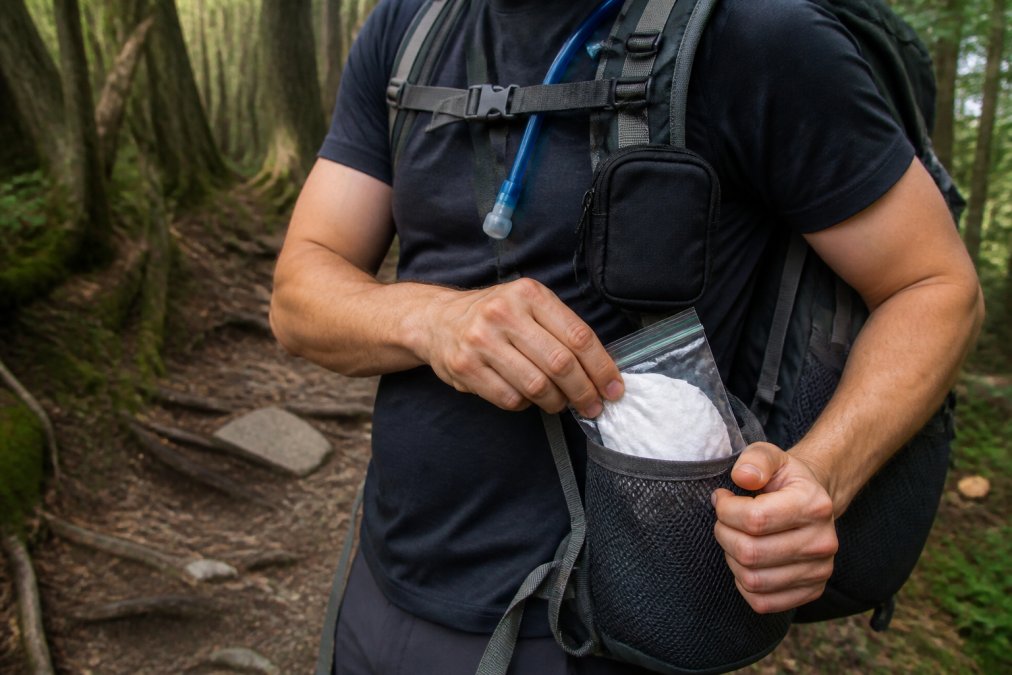
- Use the wipe and fold it inward, dirty side in.
- Slide it into a resealable bag or dedicated pack-out pouch.
- Seal the bag tight so nothing leaks into your pack.
- Store it in an outside pocket, away from food and water.
- Carry it out to a trash can at the trailhead or at home.
- Wash your hands or use hand sanitizer after handling.
The Gear That Actually Works
A standard zip-top bag works for a day hike. For anything longer, it fails. The seal weakens, the smell escapes, and by day three your pack smells like a locker room.
What most experienced hikers use instead:
- Odor-proof stuff sacks. Brands like OPSAK and Loksak make resealable bags with a laminated barrier that holds smell in. They are the same idea as a bear can liner, scaled down for hygiene waste.
- Double-bagging. A cheap zip-top inside an odor-proof sack gives you a backup if the inner seal fails.
- A dedicated pack-out pouch. Something with a roll-top or a heavy-duty zipper, clipped to the outside of your pack so it never touches your sleeping bag or food.
- A small amount of baking soda. A spoonful in the bag absorbs some of the ammonia smell that builds up over a multi-day trip.
What About Burying Waste? The Cat Hole Reality
Burying works for human waste because soil microbes process it. It does not work for wipes. The cloth does not break down on the same timeline, and animals dig up buried waste more often than people realize.
The Smell Problem and How to Live With It
Nobody talks about this part. A used wipe in a sealed bag starts to smell within a few hours, especially in warm weather. The smell is not dangerous, but it will ruin your appetite and your tent mate's mood.
Three things help:
- Keep the bag outside your pack, not inside.
- Use odor-proof bags, not just zip-tops.
- Empty and rinse the bag at the first trash can you hit, not at home. A bag that sits in a hot car for six hours after a hike is a bag you will throw away.
Full Body Wipes for Camping Trips: What to Look For
Size and durability matter more than scent when you are three days from a shower. Flimsy wipes shred on the first pass. Oversized wipes cover more ground per sheet, which means fewer in your pack.
- Large dimensions so one wipe handles a full pass
- Thick cloth that will not tear mid-use
- A cooling formula for hot days on the trail
- Individually wrapped options for pack organization
- A scent you can live with in a tent
DIY Natural Alternatives (And Why Some Backfire)
A damp cloth with a drop of castile soap works for a basic wipe-down. So does a spray bottle of water and a few drops of tea tree oil on a microfiber cloth. Both are cheap and easy to pack.
Never Flush Wipes: What Happens to Sewage Systems
Wipes do not break down in water the way toilet paper does. They clump together in pipes and pumps, and they are a leading cause of the fatbergs that clog municipal sewage systems. That damage happens whether the label says flushable or not.
Pros and Cons of Using Wet Wipes in the Backcountry
Wet wipes solve a real problem, but they come with real costs. Here is the honest breakdown.
| Factor | Pros | Cons |
|---|---|---|
| Cleanliness | Fast full-body clean without water | Must be packed out after use |
| Weight | Light and compact per wipe | Adds up over a multi-day trip |
| Skin care | Cooling formulas help on hot days | Fragrance can irritate sensitive skin |
| Environmental impact | Plant-based options break down in soil | Still trash if left behind |
| Convenience | Works anywhere, anytime | Adds waste to carry out |
The Bottom Line for Your Next Trip
Wet wipes in nature are fine. Leaving them there is not. The rule is simple: use it, bag it, carry it out. That applies to every wipe, no matter what the label claims about decomposition.
Frequently Asked Questions
Are wet wipes biodegradable in the wilderness?
Some are, but that doesn't mean you can leave them. Wipes made from viscose or plant-based fibers can break down in soil over time, and certifications like TÜV AUSTRIA verify decomposition rates. In practice, wilderness conditions vary wildly. Cold, dry, or high-altitude environments slow decomposition to a crawl. Leave No Trace guidelines say pack out all hygiene products regardless of what the label claims. Biodegradable is a disposal advantage, not a license to litter.
Can you bury wet wipes in the woods?
No. Burying wipes, even biodegradable ones, is a bad move. Animals dig them up. Rain exposes them. They sit in soil for months or years in many climates. The standard cat hole method applies to human waste, not wipes. Pack them out in a sealed bag. If you're in an area that requires wag bags, those go out too. Burying waste is for one thing only, and wipes aren't it.
How do you stay clean on a multi-day hike without a shower?
Bring full body wipes for camping trips and use them strategically. Wipe down at camp before bed to remove sweat and trail grime, then again in the morning before packing up. Focus on high-sweat areas: pits, groin, feet, and face. A quick wipe-down reduces chafing and keeps your sleeping bag from turning into a biohazard. Pack out every used wipe in a sealed bag. If you want an oversized option built for adult bodies, Manshowr XL wipes cover more surface area per wipe, so you use fewer.
What is the difference between flushable and non-flushable wipes for outdoor use?
Flushable is a marketing term, not a guarantee. Most wipes labeled flushable still don't break down fast enough for plumbing or septic systems, and they contribute to fatbergs in municipal sewers. For outdoor use, it doesn't matter. You're packing them out, not flushing them. Even wipes certified biodegradable in soil will wreck a toilet or a camper's plumbing. Trash bin or pack-out bag, never the toilet.
0 comments