

Table of Contents
- Why Size and Durability Matter for Camping Hygiene
- Biodegradable Body Wipes vs Baby Wipes: The Core Differences
- Leave No Trace Hygiene Principles for Wipe Selection
- How to Stay Clean While Camping Without a Shower
- Biodegradable Claims: What Actually Breaks Down
- Proper Disposal Methods in the Wilderness
- Choosing the Right Wipe for Your Camping Style
- Frequently Asked Questions
Last Updated: September 25, 2026
Why Size and Durability Matter for Camping Hygiene
When comparing biodegradable body wipes vs baby wipes for camping, the difference becomes clear after eight hours in a backpacking trip: standard baby wipes fall apart under sweat and dirt. They're thin, small, and designed for diaper changes, not for cleaning adult bodies in demanding outdoor conditions.

A wipe covering your entire torso in one pass beats one requiring five passes. Durability matters: the fabric must stay intact when wet and not shred under pressure.
Body wipes are engineered thicker and larger for outdoor use and adult bodies. Baby wipes prioritize gentleness for sensitive skin and compact packaging for diaper bags.
Biodegradable Body Wipes vs Baby Wipes: The Core Differences
The core differences between biodegradable body wipes vs baby wipes for camping are material, thickness, coverage, and decomposition timeline. Understanding these distinctions helps you choose the right product for your specific outdoor situation.
Material and Decomposition
Biodegradable body wipes use viscose fiber, a plant-derived material breaking down in soil within 122 days (certified). Baby wipes often contain synthetic polymers that persist in landfills for decades.
Biodegradable wipes need soil contact to decompose. Bury them in a cathole at least 200 feet from water sources. Flushing clogs pipes and accumulates waste in treatment systems.
Baby wipes mix cellulose with synthetic polymers. Even "biodegradable" versions often contain microplastics or polyester that fragment rather than fully decompose, leaving residue in soil.
Coverage and Thickness
Body wipes are oversized: a single wipe covers your chest, back, or both legs. Thickness handles friction without tearing and maintains integrity when wet.
Baby wipes are thin by design for sensitive skin. They tear easily under pressure. You'll need 8-12 to match one body wipe's coverage, adding weight and pack space over multi-day trips.
Fragrance and Skin Sensitivity
Baby wipes are hypoallergenic and pH-balanced for infant skin. If you have extremely sensitive skin, they're often gentler.
Body wipes come fragrance-free or scented. Eucalyptus formulas provide cooling and deodorizing. Fragrance-free versions suit scent-sensitive users. The cooling sensation from menthol offers a refresh baby wipes don't provide.
Leave No Trace Hygiene Principles for Wipe Selection
Leave No Trace requires minimizing environmental impact. Choose wipes designed to decompose and dispose correctly.
Use biodegradable materials. Body wipes with viscose fiber align with this. Baby wipes with synthetic polymers don't. Non-biodegradable wipes violate Leave No Trace principles and sometimes local regulations.

Bury wipes in a cathole, never on the surface or flushed. Biodegradable wipes break down in soil. Synthetic wipes persist regardless.
Pack out wipes that don't fully biodegrade. For multi-day trips, choose wipes that actually decompose rather than betting on slow breakdown.
Body wipes engineered for outdoor use meet these principles. Baby wipes often don't. Oversized body wipes reduce pack weight and environmental footprint per session.
How to Stay Clean While Camping Without a Shower
Staying clean without a shower requires strategy. Body wipes become your primary hygiene tool, and their effectiveness depends on choosing the right product and understanding the weight-to-cleanliness trade-off.
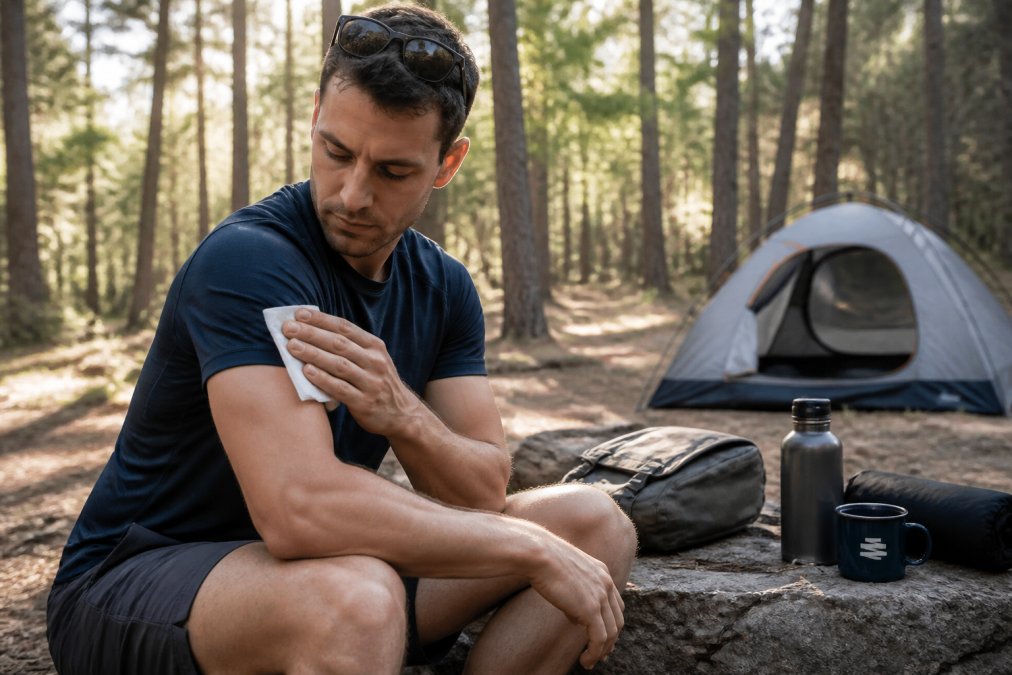
Weight-to-Cleanliness Ratio: The Backpacker's Calculus
A single oversized body wipe cleans your torso in two passes. A baby wipe requires 8-12 passes. Over five days, body wipes are more efficient. But baby wipes tear under pressure, requiring more per session. For ultralight backpackers, efficiency matters.
Cold-Weather Performance and Freezing
Wipes perform differently in freezing conditions, and most guides ignore this entirely.
Below 32 degrees, wipes freeze solid and become unusable. Keep them in an inner jacket pocket or sleeping bag where body heat maintains usability.
Fragrance-free body wipes perform better in cold weather. Menthol and eucalyptus create evaporative cooling that accelerates heat loss in freezing conditions. Fragrance-free wipes avoid this.
Used wipes freeze quickly if exposed. In sub-zero camping, pack used wipes in a sealed bag until you can bury them in unfrozen soil or pack them out.
Manshowr XL - Cooling Body Wipes →
Practical Cleaning Routine for Multi-Day Trips
Evening: Full-body wipe-down to remove sweat and dirt. Morning: Face and hands only to refresh. Mid-trip: Add a full-body wipe on day 3-4 if particularly active, otherwise skip to conserve.
Layering and Damp Skin Management
Wipe down before clean layers. In cold weather, pat skin dry after wiping to prevent evaporative cooling and maintain core temperature. Damp skin under insulation causes heat loss.
Water Conservation and Contamination Prevention
Use dry wipes or water from camp, not from lakes or streams. Body wipes are pre-moistened and don't require additional water. If using water, boil or purify it first.
Targeted Cleaning for High-Activity Days
After eight hours in a treestand, use two full-body wipes on high-sweat areas: chest, back, underarms, groin, feet. Body wipes maintain integrity under pressure; baby wipes tear. In heat above 85 degrees, plan for twice-daily wipe-downs.
Biodegradable Claims: What Actually Breaks Down
"Biodegradable" lacks strict federal regulation. Understanding what breaks down versus fragments into microplastics is critical for Leave No Trace compliance.
How to Read Biodegradable Labels
True biodegradable wipes break down through soil microorganisms, certified by third-party testing. Look for TÜV AUSTRIA Belgium or OK Compost certifications. Manshowr wipes achieve 99% decomposition within 122 days.
Baby wipes labeled "biodegradable" often break down partially or very slowly. Many contain polyester that fragments into microplastics. Without third-party certification, the label is marketing language, not a guarantee.
Check the ingredient list. Viscose fiber or plant-based cellulose are genuine biodegradable materials. Polyester, polyethylene, polypropylene, and polyvinyl alcohol fragment rather than decompose. Legitimate makers publish full ingredient transparency.
The Microplastic Problem in "Eco-Friendly" Baby Wipes
Many "eco-friendly" baby wipes contain microplastics persisting in soil for decades. Polyester reinforcement fragments into microplastic fibers detectable in soil years later. This is fragmentation, not decomposition.
Body wipes engineered for outdoor use avoid synthetic reinforcement. Manshowr products use viscose fiber throughout, which breaks down through enzymatic action by soil microorganisms. The entire wipe integrates into soil organic matter, leaving no microplastic residue.
Soil Decomposition vs. Landfill Persistence
The key distinction is where decomposition occurs. Biodegradable wipes are certified to break down in soil, not in landfills or water. Landfills lack the moisture, oxygen, and microbial activity required for decomposition. A wipe buried in a landfill will persist for years, even if it's certified biodegradable.
In wilderness soil, certified biodegradable wipes encounter the conditions needed for breakdown: moisture, aerobic bacteria, fungi, and earthworms. Burial in a cathole at least 200 feet from water sources places wipes in active soil where decomposition accelerates. Without soil contact, even certified wipes decompose slowly.
This is why disposal method matters as much as product choice. A biodegradable body wipe flushed down a toilet or left on the surface won't decompose. The same wipe buried in soil will integrate within months. Baby wipes, even those labeled biodegradable, persist in both scenarios because they contain synthetic components.
Certification Specifics to Look For
TÜV AUSTRIA Belgium certification (formerly TÜV Austria) tests wipes under ISO 14855-1 standards, measuring carbon dioxide release from microbial decomposition. Manshowr wipes achieve 99% biodegradation within 122 days. This is measurable, reproducible, and verified by independent labs.
Any product without third-party certification claiming biodegradability is unverified. Marketing claims alone don't indicate actual decomposition.
Proper Disposal Methods in the Wilderness
Correct disposal ensures wipes actually biodegrade rather than persist in the environment.
Choosing the Right Wipe for Your Camping Style
Different camping styles call for different wipe choices.
Backpacking and hiking demand lightweight, compact solutions. Oversized body wipes reduce pack weight because you need fewer items to stay clean. Their durability means they won't shred during use, and their biodegradable materials align with Leave No Trace ethics. For multi-day trips, the weight savings matter.
| Camping Style | Best Wipe Type | Key Reason |
|---|---|---|
| Backpacking (multi-day) | Biodegradable body wipes | Lightweight, durable, Leave No Trace compliant |
| Car camping | Either, but body wipes preferred | Oversized coverage reduces quantity needed |
| Cold weather | Fragrance-free body wipes | Better performance when frozen, less evaporative cooling |
| Warm weather | Scented body wipes (eucalyptus) | Cooling sensation enhances refresh |
| Sensitive skin | Fragrance-free body wipes | Unscented, durable, effective |
Frequently Asked Questions
Are biodegradable body wipes actually better than baby wipes for camping?
Biodegradable body wipes are larger, thicker, and designed to handle full-body cleaning in one or two wipes. Baby wipes are smaller and less durable, requiring more of them to cover the same area. For camping, body wipes minimize waste and pack weight while still breaking down in soil within 100-150 days when disposed properly. Baby wipes work in a pinch, but body wipes engineered for outdoor use are more practical for multi-day trips.
How do I practice Leave No Trace hygiene principles when using wipes?
Bury wipes in a cathole at least 200 feet from water sources, trails, and camp areas. Pack soil over the wipes to accelerate decomposition. This method works for biodegradable wipes certified for soil decomposition. Never leave wipes on the surface. For high-traffic areas or protected zones, pack wipes out entirely. Carry used wipes in a sealed bag and dispose of them properly at home. Use water and wipes at least 200 feet from streams or lakes. Choose fragrance-free or lightly scented options to avoid attracting wildlife. The core principle is leaving the campsite cleaner and less disturbed than you found it.
Do biodegradable wipes really break down in the woods, or is that marketing?
Certified biodegradable wipes made from viscose fiber break down 99% in 122 days in soil under lab conditions. Real-world decomposition depends on moisture, temperature, and soil microbes. In damp soil during warm months, they break down faster. In cold or dry conditions, decomposition slows significantly. The key: they do break down eventually, unlike synthetic wipes that persist for years. Burying them in a cathole at least 200 feet from water sources places wipes in active soil where decomposition accelerates.
How many body wipes do I actually need for a weekend camping trip?
A single full-size body wipe covers your entire torso, arms, and legs. For a three-day trip with daily cleanups, plan accordingly. If you're dealing with heavy sweat or mud, you may need more. A single box of 12 wipes can cover most weekend trips. For longer expeditions, calculate based on your cleanliness needs and pack accordingly, keeping weight in mind.
0 comments